Journal
Which supplements actually support PCOS?
Johanan Thomas · September 15, 2026 · 1 min read
Last updated
Quick answer
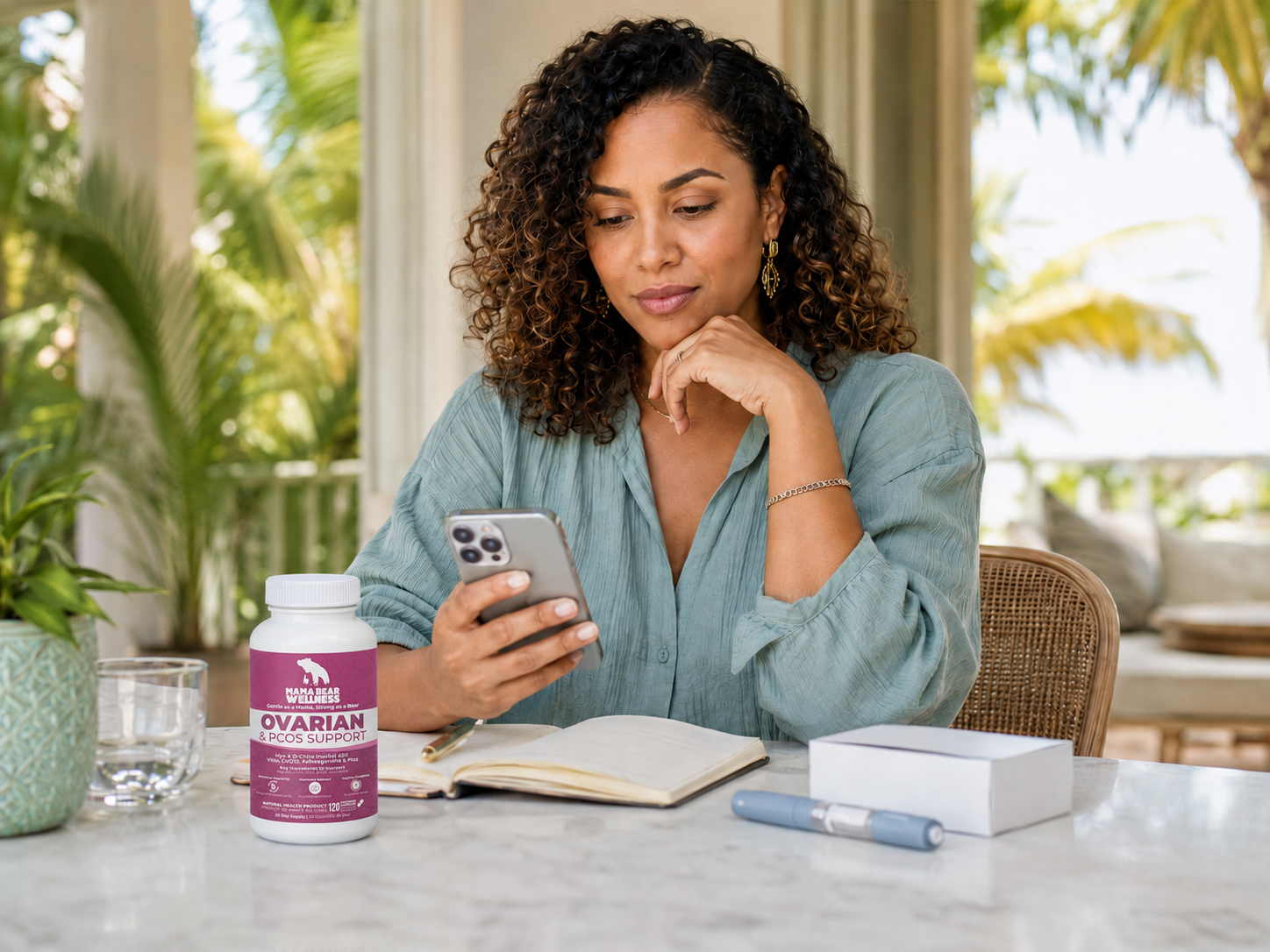
The PCOS supplement ingredients with the most research behind them are myo-inositol with D-chiro-inositol in a 40:1 ratio, vitamin D where levels are low, and to a lesser extent CoQ10 and omega-3s. The 2023 international PCOS guideline treats inositol as something that may be considered while noting the evidence is limited, and puts lifestyle measures and prescribed medication first. Supplements support management; they do not treat PCOS. Mama Bear Ovarian & PCOS Support (NPN 80130307) provides 2,000 mg myo-inositol and 50 mg D-chiro-inositol daily.
Inositol
Myo-inositol acts in the cellular pathway that responds to insulin, which is why it is the most-studied supplement in PCOS. Research pairs it with D-chiro-inositol at a 40 to 1 ratio, typically 2,000 mg myo-inositol with 50 mg D-chiro-inositol. Trials look at insulin markers, cycle regularity and ovulation over three to six months. They are mostly small, so treat any precise success figure you see quoted with suspicion.
Vitamin D
Low vitamin D is common in PCOS. Correcting a genuine deficiency is worthwhile on its own terms; supplementing beyond that has not been shown to fix PCOS. A blood test tells you whether this applies to you.
CoQ10
CoQ10 is an antioxidant involved in cellular energy production and is studied in the context of egg quality and metabolic markers. The PCOS-specific evidence base is smaller than for inositol.
Ashwagandha
Ashwagandha is an adaptogen studied for stress and cortisol rather than for PCOS itself. It is included in formulas because stress load affects how people cope with the condition, not because it corrects the underlying hormonal picture.
Folate
Folate matters for anyone who could become pregnant, and irregular cycles do not mean no ovulation. Most PCOS formulas include it for that reason.
What is in our formula
Mama Bear Ovarian & PCOS Support, licensed under NPN 80130307, provides 2,000 mg myo-inositol, 50 mg D-chiro inositol, 100 mg CoQ10, 100 mg ashwagandha root, 50 mg chasteberry, 25 mcg vitamin D and 400 mcg folate.
What comes first
The international guideline is consistent on this: lifestyle measures and, where indicated, prescribed medication are first-line. Supplements sit alongside that, and anyone managing insulin resistance or trying to conceive should be having this conversation with a clinician.
Common questions
- What is the best supplement for PCOS?
- Myo-inositol with D-chiro-inositol in a 40:1 ratio has the most research behind it. Vitamin D matters where a blood test shows you are low. Neither is a treatment for PCOS.
- How much inositol is in a typical PCOS formula?
- Most provide 2,000 mg of myo-inositol with 50 mg of D-chiro-inositol per daily dose. Research has also used 2,000 mg twice daily.
- Does chasteberry help PCOS?
- Chasteberry has traditional use for cycle regularity and is included in some formulas on that basis. The clinical evidence in PCOS specifically is limited.
- Should I take supplements instead of metformin?
- No. Prescribed medication and supplements are different things, and stopping a prescription is a decision for your prescriber.
- How long do PCOS supplements take to work?
- Studies typically run three to six months. Judge over cycles, not weeks.